Present past and past participle verbs list pdf mattersrewa
Past Participle Definition, Forming Rules and Useful Examples • 7ESL
No Past Perfect, o particípio passado é usado com o verbo auxiliar haver no passado (had) para indicar uma ação realizada antes de outra ação passada. Por exemplo: The thief had escaped when the police arrived (O ladrão havia escapado quando a polícia chegou). Ou seja: aqui, o uso do past participle inglês indica que, quando a polícia.
PAST PARTICIPLE. Part 1 english englishwords vocabulary stationary learnenglish

Past Simple é o tempo verbal usado para falar de ações que já aconteceram (ações e eventos que ficaram no passado). Past Participle forma do verbo usada em construções gramaticais específicas (tempos compostos, voz passiva, etc). Percebendo a diferença em inglês. Veja as sentenças abaixo:
Alguém pode me explicar oq é o past participle? As duas primeiras colunas dos verbos eu entendo
6 músicas para aprender e praticar o past participle. Para colocar uma cereja no topo do bolo, pensamos com muito carinho nestas indicações de músicas para você aprender o past participle. Elas incluem canções na voz passiva e no past e present perfect. Mas, antes de chegarmos nela, fique sabendo que dá para treinar seu listening e.
Quando usar o Past Participle e Quando Usar o Simple Past?

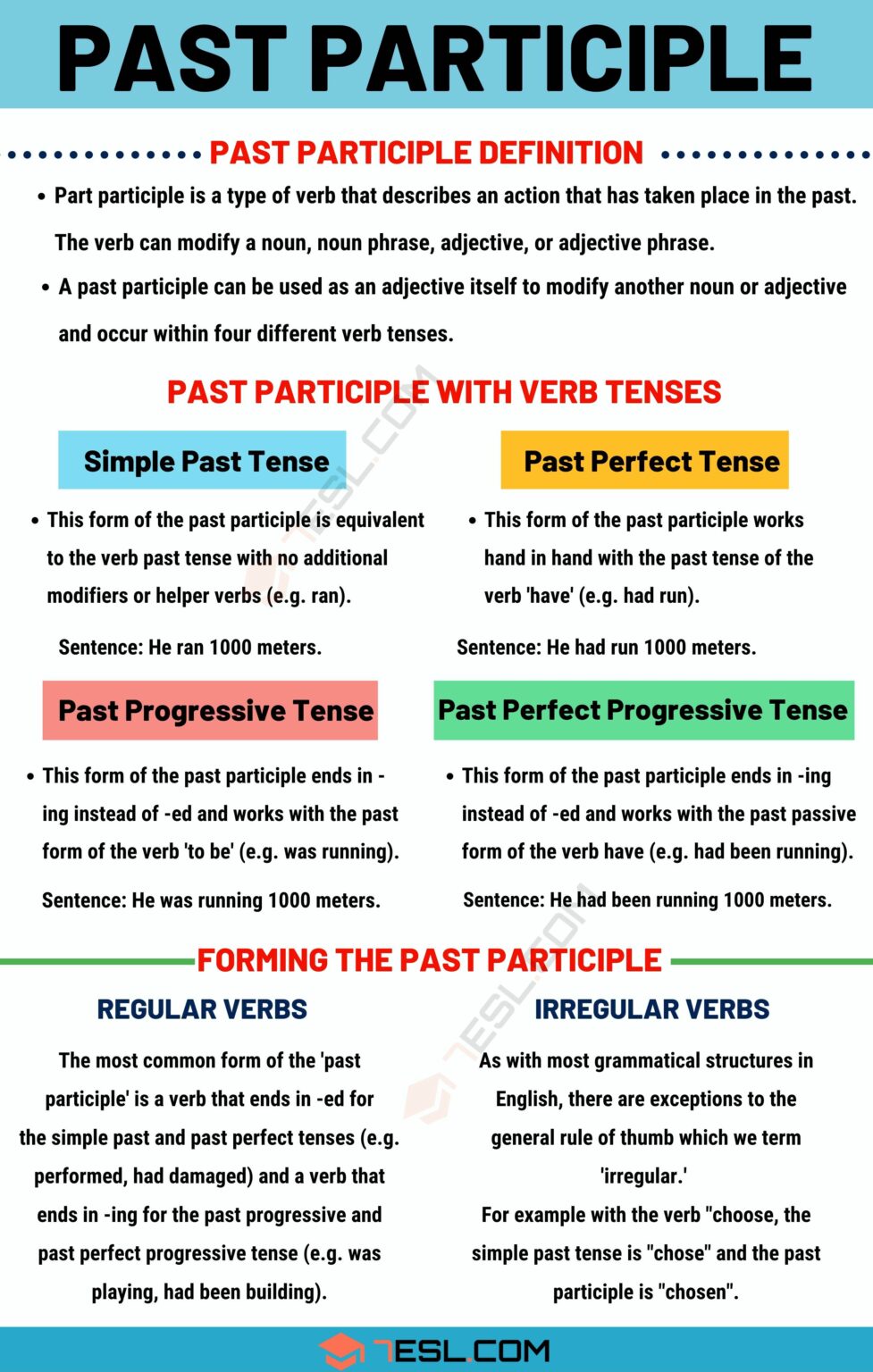
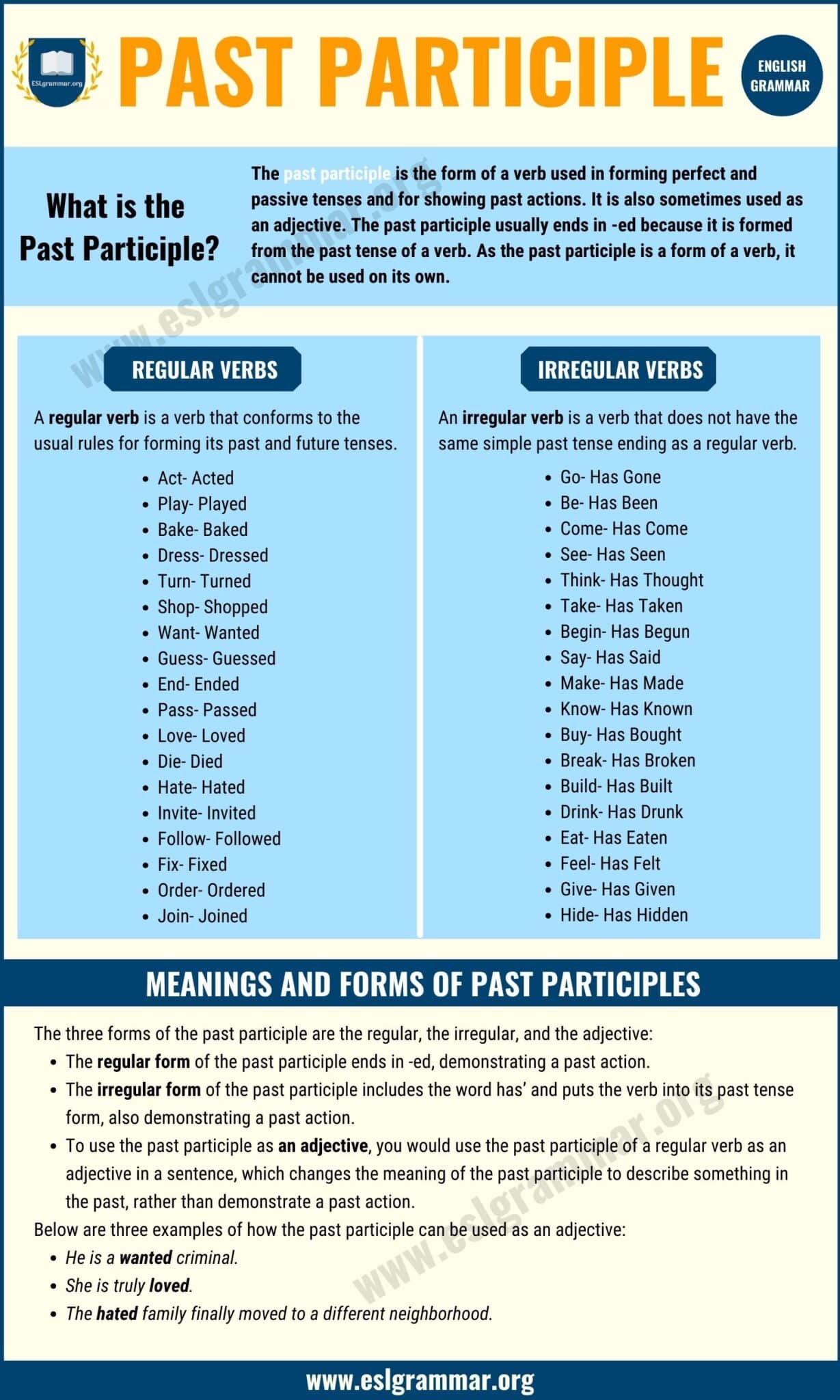
The most common form of the 'past participle' is a verb that ends in -ed for the simple past and past perfect tenses (e.g. performed, had damaged) and a verb that ends in -ing for the past progressive and past perfect progressive tense (e.g. was playing, had been building). Regular verbs form the 'general' case for past participle usage.
Past Simple and Past Participle Vanessa Forsyth

Updated on July 02, 2020. In English grammar, the past participle refers to an action that was started and completed entirely in the past. It is the third principal part of a verb, created by adding -ed, -d, or -t to the base form of a regular verb. The past participle is generally used with an auxiliary (or helping) verb— has, have, or had.
List of Past Participle Grammar Syntax

Olá, Brian. The past participle is a verb form that can be used in a number of different ways: - as an adjective - combined with the past tense of ser when using passive voice (e.g. foi construído) - combined with the auxiliary verb ter to form different compound tenses The latter does involve new verb tenses, such as: - Pretérito perfeito composto (present perfect continuous): eu.
A diferença entre o Past Simple e o Past Participle

De modo bem resumido, o Past Participle é um jeito que devemos escrever ou falar os verbos para usá-los em certas estruturas gramaticais em inglês. Veja: A forma do verbo escrita acima com letra maiúscula e em negrito é a forma do verbono PastParticiple. Essa forma especial é usada em alguns casos.
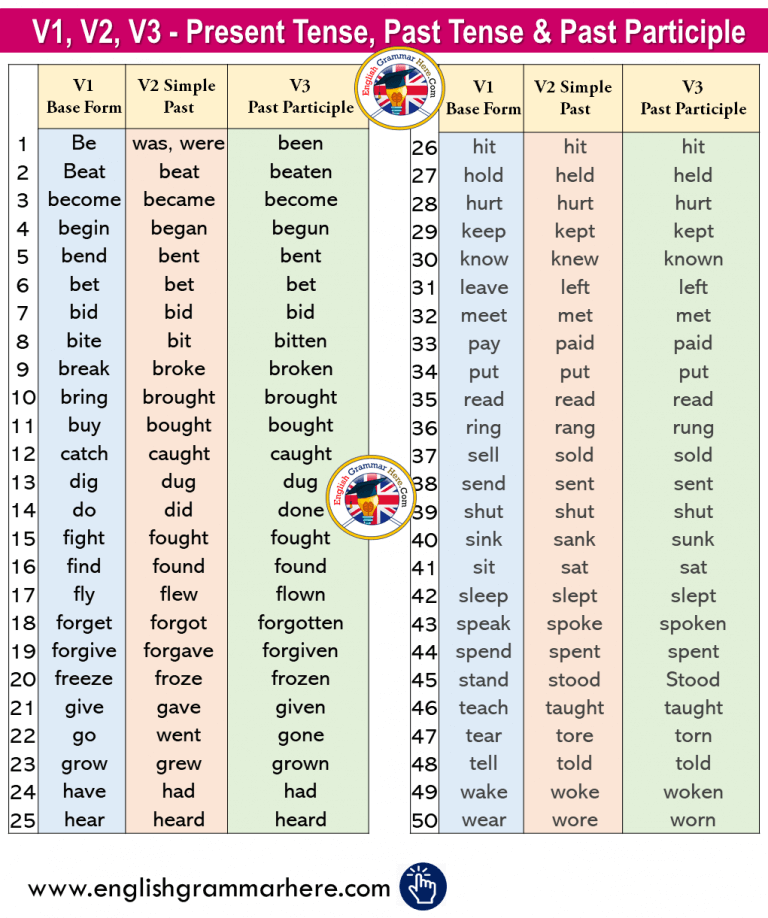
50 Examples of Present Tense, Past Tense and Past Participle English Study Here

O past participle é um daqueles tempos verbais que parecem complicados à primeira vista e se tornam muito úteis quando aprendidos. Confira! O past participle, apesar de dar o sentido de passado, não é utilizado como tempo verbal como o simple past. O past participle é aplicado nas seguintes estruturas gramaticais: perfect tenses, como.
Essential english irregular verbs exkasap

Olá. Yes, as discussed in this Learning Note, the irregular past participle of 'agradecer' is 'grato', so I understand that you would expect to see 'estar grato' and not 'estar agradecido'.. What happens is that the pair 'grato/agradecido' is a bit of an exception - it is rather common for us to use both types of past participles regardless of the auxiliary verb at hand.
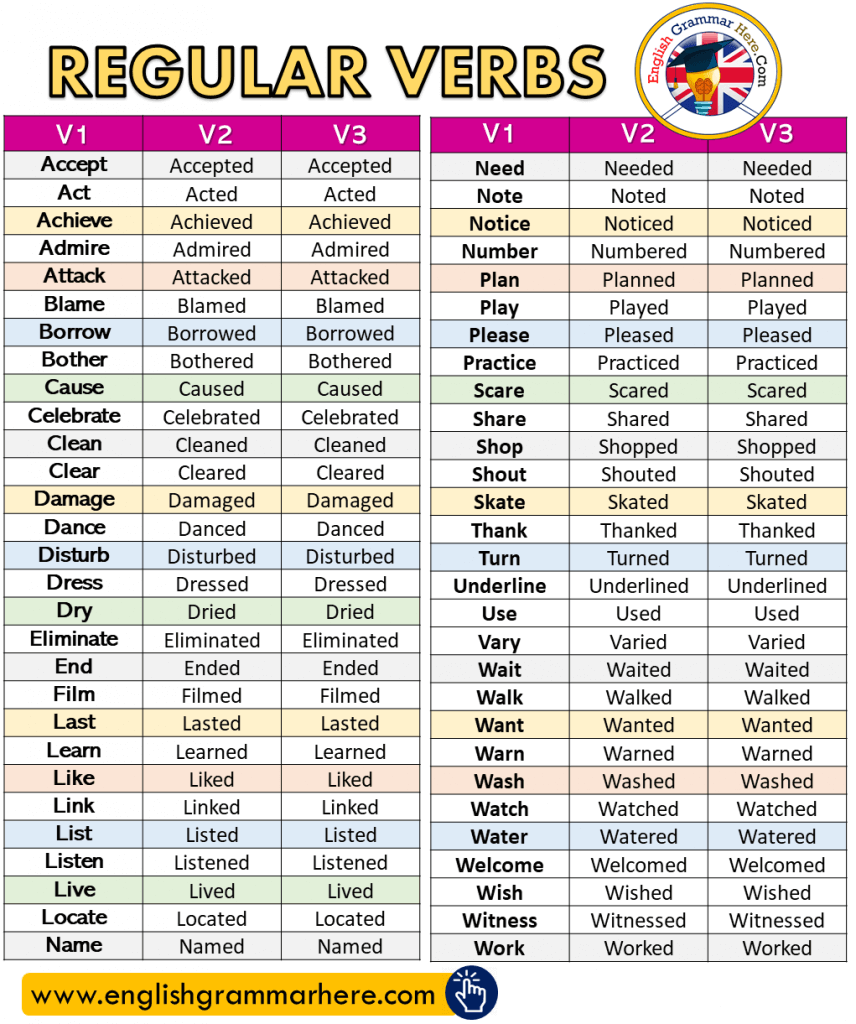
V1, V2, V3 Present Tense, Past Tense & Past Participle English Grammar Here
O que é past participle? Entende-se por past participle a forma verbal que compõe tempos verbais, tais como os tempos perfeitos e a voz passiva, e também que assume a função de adjetivo nas.
Participles What Is A Participle? Present & Past Participle • 7ESL
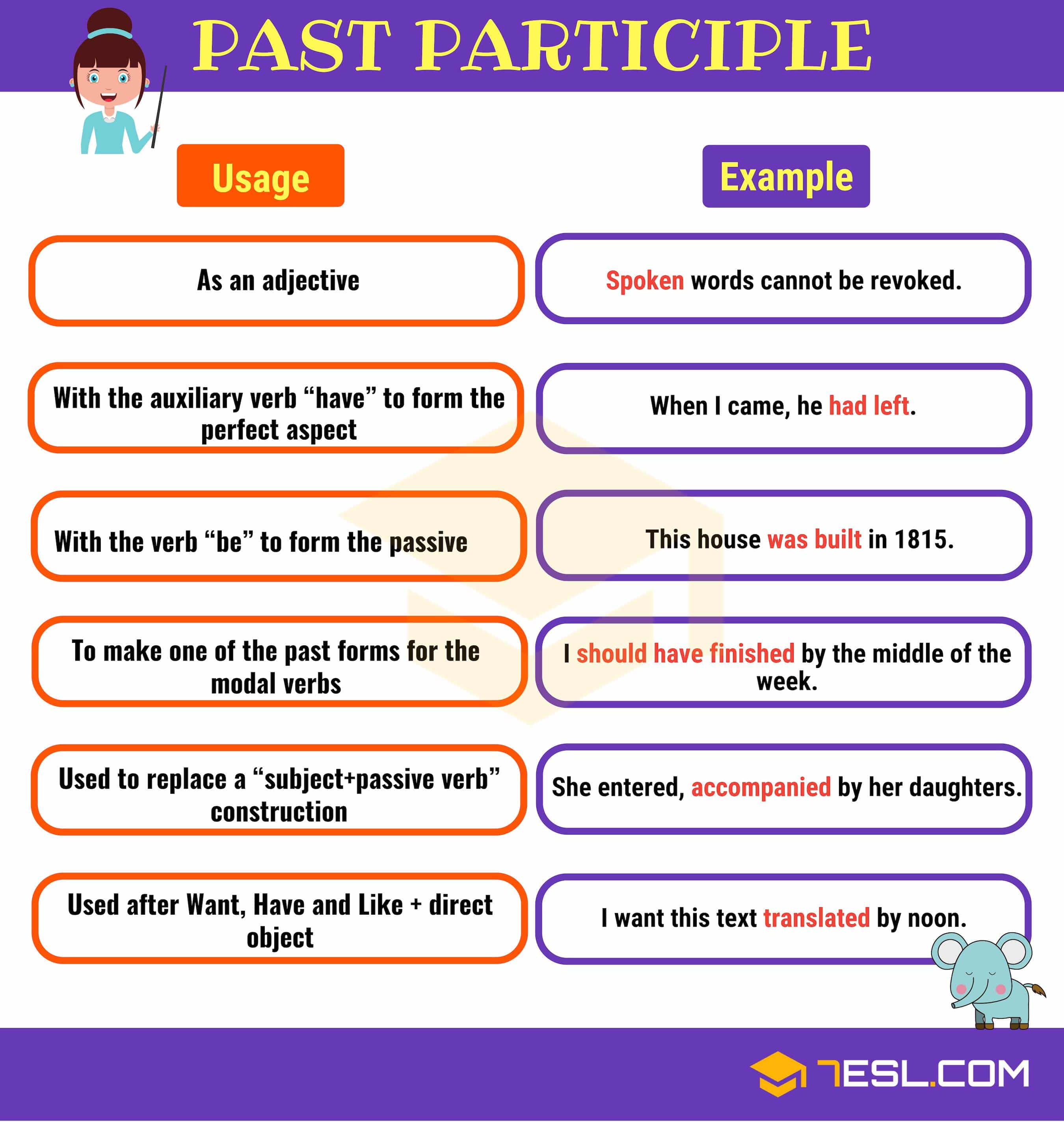
Basically, the past tense is a true verb tense while the past participle is a verb-derived form that has three distinct uses. Since past participle verbs are not tenses, they can't be used on their own. You need an auxiliary verb such as "have" or "had.". Because of this, the past participle is commonly used as a compound verb.
Present past and past participle verbs list pdf mattersrewa

A past participle is a word derived from a verb that can be used as an adjective, to form perfect verb tenses, and to form the passive voice. It is one of two types of participles, along with present participles. The past participles of regular verbs are usually formed by adding the suffix "-ed" (e.g., "learn" becomes " learned ").
Past Participle in English Regular and Irregular Verbs Langster
The past participle has three main uses in French: 1. With an auxiliary verb, the past participle forms compound tenses such as the passé composé : J'ai travaillé hier. I worked yesterday. Il est arrivé à midi. He arrived at noon. 2. With être, the past participle is used to conjugate the French passive voice .
listofpastparticiple.pdf Grammar Syntax

The past participle is used with the following tenses: Present Perfect. I have seen it. Past Perfect. I had seen it. Future Perfect. I will have seen it. 3rd Conditional. I would have seen it. Passives. It was seen. Read through the following sentences and choose the correct verb tense to complete each sentence.
Past Participle Meanings and Different Forms of Past Participles ESL Grammar
Yes, it does! You'll only see feminine past participles (regular or irregular) with the auxiliary verbs ser, estar or ficar, because then, those past participles function as adjectives (passive voice) and not as a proper verb form. - A porta foi aberta. (The door was opened) - A porta está aberta. (The door is open) - A porta fica aberta. (The door stays open) But: - Eu tenho aberto.
100 example of regular verbs with past tense and past participle English Grammar Here
In the examples below, the participle phrases are shaded and the past participles are in bold: The boy taken to hospital has recovered. (The participle phrase "taken to hospital" describes "the boy.") I have a heart wracked with sorrow. (The participle phrase "wracked with sorrow" describes "a heart.")
.